
Precision Powertrain Components | Uncompromised Performance Legacy
Core-Driven Innovation | Redefining Aftermarket Excellence
Views: 0 Author: Site Editor Publish Time: 2026-10-03 Origin: Site


Ordering the wrong emissions component results in extended bay time. It delays freight and quickly compounds labor costs. Engine manufacturers constantly update emissions hardware mid-production. Because of this, guessing fitment based solely on vehicle make and model is a high-risk strategy. You cannot rely on basic vehicle data alone. Manufacturers regularly revise internal designs to meet evolving emission standards.
We provide a definitive framework for cross-referencing these critical parts. You will learn how to validate the exact cooler required for your specific diesel engine. This process ensures first-time fitment and strict EPA/CARB compliance. You will avoid expensive rework by following these straightforward validation steps. Identifying the correct hardware from the start protects your engine from secondary failures.
The most reliable matching method relies on the Engine Serial Number (ESN) and the specific OEM part number stamped on the original cooler, rather than just the vehicle VIN.
Part number supersessions are common; older OEM numbers often map to updated, redesigned replacement parts.
Evaluating a replacement requires verifying internal cooling architectures (e.g., tube-style vs. fin-and-tube) to ensure it meets or exceeds original thermal load specifications.
A successful replacement job requires a comprehensive order sheet that includes associated gaskets, coolant, and an inspection of the EGR valve.
A mismatched part does more than just delay a routine repair. It occupies a critical service bay. It halts revenue generation. When mechanics wait on replacement hardware, productivity drops significantly. Choosing an incompatible component creates severe mechanical risks. It disrupts the precise balance of your engine emissions system.
Many mechanics focus on the initial purchase price of a part. They ignore the broader impact of a vehicle sitting idle. A mismatched part forces the vehicle to remain in the shop for days. You must reorder components, wait for shipping, and repeat the teardown process. The financial impact of this downtime often vastly exceeds the price of the part itself. First-time fitment keeps trucks on the road and generating revenue.
Installing an incompatible cooler leads to improper exhaust gas flow. Engine control modules expect a specific volume of cooled exhaust gas. When a mismatched cooler disrupts this flow, you experience high exhaust gas temperatures (EGTs). Elevated temperatures can cause immediate subsequent EGR valve failure. High thermal loads also create localized coolant boiling inside the housing. This boiling causes micro-fractures in the internal metal pathways. Eventually, coolant leaks directly into the exhaust stream. This scenario often results in catastrophic engine damage.
Federal and state regulations dictate strict emission standards. Using a cooler not rated for your specific engine application carries heavy penalties. An improper unit easily triggers recurring check engine lights (CELs). These persistent codes frustrate drivers and mechanics alike. Furthermore, installing the wrong part will instantly void manufacturer warranties. It also violates regional emissions regulations, particularly stringent CARB standards. You must ensure the component strictly matches original factory specifications to remain compliant.
Identifying the exact part on your engine represents the foundation of a successful repair. You must find the physical identification tag. This tag confirms exactly what the factory installed on the assembly line.
Manufacturers stamp or engrave a unique identification code directly on the physical unit. However, mechanics often struggle to find it. Years of road grime, soot, and heavy heat shielding obscure these critical numbers. You must know exactly where to look and how to clean the surface safely.
Remove heat shields: Carefully unbolt any thermal blankets surrounding the housing.
Locate the flat machined surface: Most manufacturers stamp the part number on a flat, machined end-cap.
Clean the area: Use a mild solvent and a soft brass wire brush. Scrub away accumulated soot and rust.
Document the code: Take a clear, well-lit photograph of the stamp before removing the part from the engine.
Common OEM Identification Tag Locations
Engine Manufacturer | Typical Stamping Location | Common Characteristics |
|---|---|---|
Cummins (ISX / ISB) | Machined flat surface near the coolant inlet port. | Typically an 8-digit numeric code. |
Ford Powerstroke | Adhesive foil tag or stamp on the center cylindrical body. | Often includes an alphanumeric prefix (e.g., BC3Z). |
Detroit Diesel | Laser-etched on the mounting flange. | Requires careful cleaning; laser etching fades easily. |
Duramax | Stamped directly into the aluminum end-casting. | Usually features a raised cast number alongside the stamp. |
Engine manufacturers frequently update original OEM EGR cooler numbers. They do this to address early failure points discovered in real-world driving. When an old design fails, the manufacturer releases a redesigned unit under a new SKU. Tracing an old number to a new SKU requires patience. You cannot assume the old number will pull up the exact same part. You must track the supersession chain. Consult official dealer portals or verified manufacturer databases. These databases link your old stamped number to the currently active, redesigned part.
We strongly warn against blindly trusting third-party marketplaces. Retail platforms often use fuzzy matching algorithms. They prioritize search volume over strict engineering accuracy. This leads to rampant mislabeling. You must utilize verified manufacturer cross-reference catalogs instead. These catalogs confirm the mapped part physically and functionally matches your engine. Always cross-check the superseded number across at least two professional parts databases before ordering.
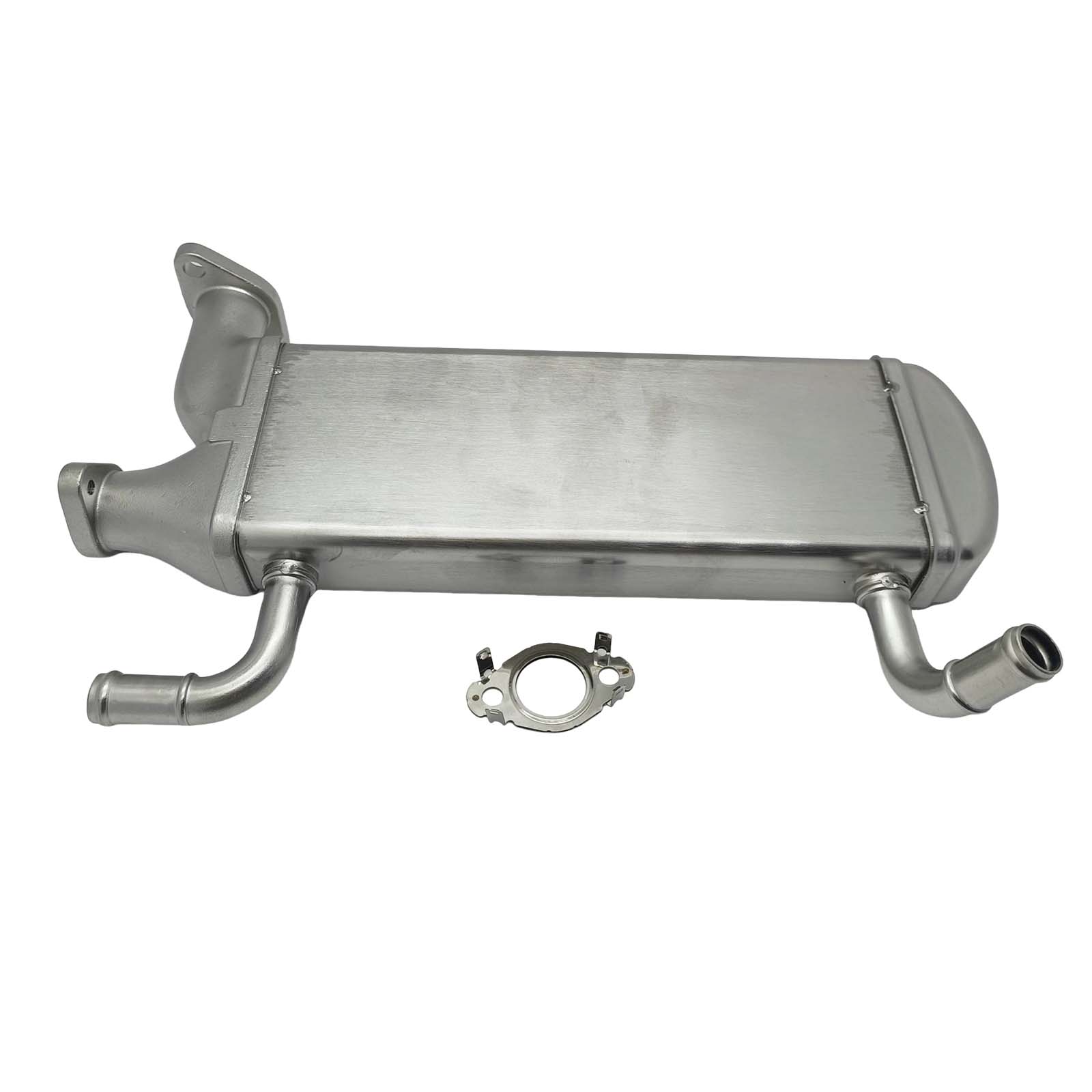
Relying purely on the vehicle make and model leads to constant procurement errors. Medium and heavy-duty truck platforms utilize highly modular engine configurations. You need a deeper level of identification to secure the correct hardware.
In medium and heavy-duty truck applications, the Vehicle Identification Number (VIN) often serves as a secondary data point. The Engine Serial Number (ESN) acts as the primary identifier. Fleet managers frequently swap, rebuild, or modify engines post-factory. A truck might roll off the assembly line with one engine generation. Five years later, it might house a slightly different engine block. The VIN only tells you how the truck left the factory. The ESN tells you exactly what sits between the frame rails right now. You must prioritize the ESN for all emissions component orders.
Engine manufacturers constantly make mid-year design changes. They tweak routing paths. They alter mounting brackets. They even switch from round to square housing profiles halfway through a production year. These running changes create massive confusion in the aftermarket. ESN validation becomes mandatory here. Securing the correct diesel EGR cooler depends entirely on knowing where your engine falls in the production timeline. The ESN dictates which specific housing profile and mounting bolt pattern your engine requires.
Automakers use the exact same engine block across wildly different chassis platforms. A 6.7L engine in a pickup truck operates differently than the identical block in a commercial chassis cab. The commercial chassis often features restricted engine bays. This requires entirely different exhaust routing. Consequently, the cooling hardware changes shape to fit the available space. Never assume a part fits simply because it matches the engine displacement. You must verify the specific vehicle application alongside the ESN.
Once you secure the correct part numbers, you face a critical decision. You must choose between a standard factory replacement or an upgraded aftermarket unit. Not all replacements offer the same durability.
Direct factory replacements sometimes carry over the exact same design flaws as the original unit. Many early generation units utilized fragile fin-and-tube internal architectures. These designs feature tightly packed radiator-style fins. Soot easily accumulates between these dense fins. The buildup restricts exhaust flow and traps intense heat. Eventually, the extreme thermal cycling causes the thin metal fins to rupture. Buying a standard factory replacement often means installing a part doomed to fail in the exact same manner.
You should frame your evaluation entirely around thermal durability. Upgraded replacement EGR cooler designs prioritize long-term longevity over cheap manufacturing costs. Look for stainless steel, TIG-welded tube architectures. These designs replace fragile fins with robust stainless steel tubes. The wider tube pathways allow thick soot to pass through without clogging. The heavy-duty TIG welds withstand brutal thermal expansion. These upgraded architectures easily meet or exceed original thermal load specifications. They drastically reduce the likelihood of a secondary failure.
Architecture Comparison Chart
Feature | Traditional Fin-and-Tube (OEM) | Upgraded Stainless Tube (Aftermarket) |
|---|---|---|
Internal Structure | Tightly packed aluminum or thin steel fins. | Thick-walled stainless steel cylindrical tubes. |
Soot Clogging Risk | High. Narrow passages trap carbon quickly. | Low. Wide tubes allow smooth exhaust flow. |
Thermal Resilience | Moderate. Prone to cracking under extreme EGTs. | Excellent. TIG welds handle expansion smoothly. |
Best Application | Light duty, strict factory restoration. | Heavy towing, commercial fleet usage, high idle times. |
You must establish strict criteria for evaluating suppliers. Always look for transparent manufacturing specifications. Reputable vendors proudly display their engineering materials and welding techniques. Demand pressure-testing verification prior to shipping. Every unit should undergo hydro-testing to ensure zero coolant leaks. Finally, examine the warranty terms. Look for realistic warranty terms covering rigorous commercial usage. A supplier offering a robust warranty demonstrates confidence in their upgraded internal architecture.
Replacing an emissions component is rarely a simple one-piece swap. Successful mechanics treat this job as a comprehensive system overhaul. You must prepare a complete job order sheet before turning a single wrench.
Frame the repair as a system-wide fix. An isolated part swap usually leads to immediate comebacks. When a cooling unit ruptures, it introduces superheated gas and debris into the wider engine ecosystem. Simply bolting on a new unit ignores the downstream contamination. You must clean mating surfaces thoroughly. You must flush the cooling system to remove trapped exhaust particulates. A comprehensive approach ensures the new unit operates in a clean, optimal environment.
These two components operate in a symbiotic relationship. A failed cooling unit often heavily contaminates related components. Superheated exhaust gas cooks the delicate electronics and mechanical gears inside the valve. Carbon sludge binds the valve pintle, causing it to stick open or closed. We strongly recommend testing or proactively replacing the valve during this repair. Pairing a fresh EGR Cooler with a new valve prevents immediate rework. It restores the entire exhaust recirculation system to factory baseline performance.
Never start the teardown process without having all necessary supporting hardware on your bench. Waiting on a specialized gasket mid-job destroys shop efficiency. Provide your parts department with a strict checklist during the procurement stage.
OEM-grade installation gaskets and O-rings: Never reuse old seals. Heat cycling permanently compresses old rubber and metal gaskets. Reusing them guarantees a dangerous coolant or exhaust leak.
Required coolant specifications: Use only the manufacturer-approved coolant. Incorrect fluids cause silicate dropout. This creates an abrasive gel that destroys the new internal metal pathways. Proper coolant prevents internal corrosion.
New mounting hardware: Exhaust bolts suffer severe heat fatigue. They stretch and weaken over time. Secure new bolts to ensure proper clamping force on the new gaskets.
Exhaust manifold clamps: V-band clamps often warp during removal. Keep spares on hand to secure a tight, leak-free exhaust seal.
Securing the right component requires diligence and a structured approach. Guessing based on basic vehicle data invites costly downtime and mechanical failure. We reiterate that matching by OEM number combined with ESN validation is the only secure way to procure the correct part. You must trace part number supersessions carefully. You must evaluate the internal architecture of your replacement options to ensure long-term thermal durability. Furthermore, building a comprehensive job order sheet prevents frustrating secondary failures.
Take action before your truck enters the service bay. Locate your current OEM part number stamped on the housing. Write down your Engine Serial Number. Utilize an on-site search tool or contact professional technical support for immediate cross-referencing. Verifying availability and fitment today ensures a smooth, profitable repair tomorrow.
A: This indicates a part number supersession or a mid-year production split. Manufacturers update designs frequently. When multiple options appear, you must use your Engine Serial Number (ESN) to clarify exact fitment. The ESN identifies your specific engine build date, ensuring you select the correctly revised replacement part.
A: We do not recommend cleaning units that have overheated. While ultrasonic cleaning removes soot, it cannot fix micro-fractures caused by thermal stress. Once a unit experiences localized coolant boiling, the internal metals weaken. Cleaning it often leads to a rapid secondary failure and internal coolant leaks.
A: No, as long as you choose a direct-fit, emissions-compliant replacement. High-quality aftermarket units feature upgraded internal structures (like stainless tubes) for durability but maintain factory exhaust flow rates. They are fully legal and compliant. Avoid illegal "delete" kits, which violate federal EPA and regional CARB regulations.


