
Precision Powertrain Components | Uncompromised Performance Legacy
Core-Driven Innovation | Redefining Aftermarket Excellence
Views: 0 Author: Site Editor Publish Time: 2026-09-30 Origin: Site


Modern diesel and high-efficiency engines rely heavily on exhaust gas recirculation to meet strict emissions targets. However, the cooling module frequently emerges as a critical failure point. Extreme thermal fatigue and severe soot fouling often force premature component replacements. Balancing strict NOx emission compliance with steadfast operational reliability requires moving beyond basic OEM defaults. Engineers and fleet managers must evaluate specific material properties and structural designs to ensure system longevity. This article provides a comprehensive technical evaluation framework. We will help you select an optimal unit based on heat transfer efficiency, fouling resistance, and long-term durability. You will learn how material choices and internal geometries directly dictate performance outcomes under severe loads.
Material selection (e.g., aluminum vs. stainless steel) directly dictates the trade-off between heat transfer efficiency and thermal shock resistance.
The internal geometry of the EGR cooler core determines the susceptibility to soot deposition (fouling) and pressure drops.
Manufacturing techniques, specifically the adoption of a vacuum-brazed EGR cooler, significantly reduce the risk of internal coolant leaks caused by joint fatigue.
EGR cooler specification must account for the upstream performance of the EGR valve and overall engine operating profiles.
Designing an effective exhaust gas cooling system presents a difficult engineering conflict. You must maximize exhaust gas cooling to lower combustion temperatures. This action effectively reduces harmful NOx emissions. Simultaneously, the component must survive extreme temperature deltas without fracturing or cracking. High-load engine cycles push exhaust temperatures well above 700°C. The cooling system must rapidly drop this temperature using engine coolant running at roughly 90°C. This massive temperature difference induces severe thermal shock across the structural metals.
Thermal fatigue poses a massive threat to rigid metal structures. Metals expand when heated and contract when cooled. Constant expansion and contraction stress the welded joints. Over time, this stress causes microscopic cracks. Coolant can then escape into the exhaust stream. This scenario often leads to catastrophic engine damage. You must find a design balancing aggressive cooling performance against mechanical flexibility.
Furthermore, we must address fouling as a primary degradation factor. Diesel exhaust contains high levels of particulate matter and unburnt hydrocarbons. These elements combine to form a thick, sticky layer inside the cooling channels. This soot buildup acts as a highly effective thermal insulator. It prevents heat from transferring into the coolant. As soot accumulates, thermal efficiency drops dramatically. The layer also restricts internal gas flow, which dramatically increases backpressure on the engine system.
A successful procurement or design choice minimizes early replacement expenses. You must balance thermal efficiency margins against structural resilience. The ideal unit resists fouling buildup while enduring high-frequency engine vibration. Fleet operators demand components prioritizing maximum operational uptime. Evaluating materials and manufacturing processes logically leads to better reliability.
Selecting the right base metal determines the ultimate lifespan of the system. Manufacturers typically choose between aluminum alloys and stainless steel variations. Each material offers distinct thermal and structural profiles. You must align your material choice directly with the intended engine application.
First, let us examine the aluminum EGR cooler. Aluminum offers superior thermal conductivity. Heat transfers through aluminum much faster than through steel. This allows engineers to design smaller, highly compact cooling units. Aluminum also weighs significantly less, making it highly desirable for passenger vehicles. It remains very cost-effective for high-volume, light-duty automotive applications.
However, aluminum carries significant limitations and risks. It possesses a lower melting point and exhibits high susceptibility to thermal fatigue. Extreme load variations quickly degrade aluminum structures. Furthermore, aluminum requires strict coolant chemistry management. Poor coolant maintenance leads to rapid internal galvanic corrosion. Corroded aluminum fails quickly under pressure.
Conversely, we evaluate stainless steel coolers. Manufacturers typically use austenitic (300-series) or ferritic (400-series) stainless steel grades. Stainless steel delivers exceptionally high resistance to acidic exhaust condensates. As exhaust gas cools, it drops below its dew point. This creates a highly corrosive acidic mixture. Stainless steel easily withstands this chemical attack. It also maintains excellent structural integrity under severe thermal shock. These traits make it ideal for heavy-duty commercial fleet applications.
The primary limitation of stainless steel is its lower baseline thermal conductivity. It transfers heat slower compared to aluminum. Engineers must compensate for this by increasing the overall surface area. They often design longer or wider units to achieve identical cooling targets. The added weight and size can complicate packaging in small engine bays.
Our objective verdict remains clear. You should choose aluminum for space-constrained, weight-sensitive passenger applications. You must specify stainless steel for maximum operational longevity in harsh, heavy-duty environments.
Material Type | Thermal Conductivity | Corrosion Resistance | Ideal Application | Primary Vulnerability |
|---|---|---|---|---|
Aluminum Alloys | Excellent (~205 W/m·K) | Moderate (Requires specific coolant) | Light-Duty / Passenger Cars | Internal galvanic corrosion |
Austenitic Stainless Steel (304/316) | Low (~15 W/m·K) | Superior (Acid resistant) | Heavy-Duty Diesel Trucks | Requires larger physical packaging |
Ferritic Stainless Steel (400 Series) | Moderate (~25 W/m·K) | High (Good thermal cycling) | Medium-Duty Commercial | Slightly lower ultimate tensile strength |
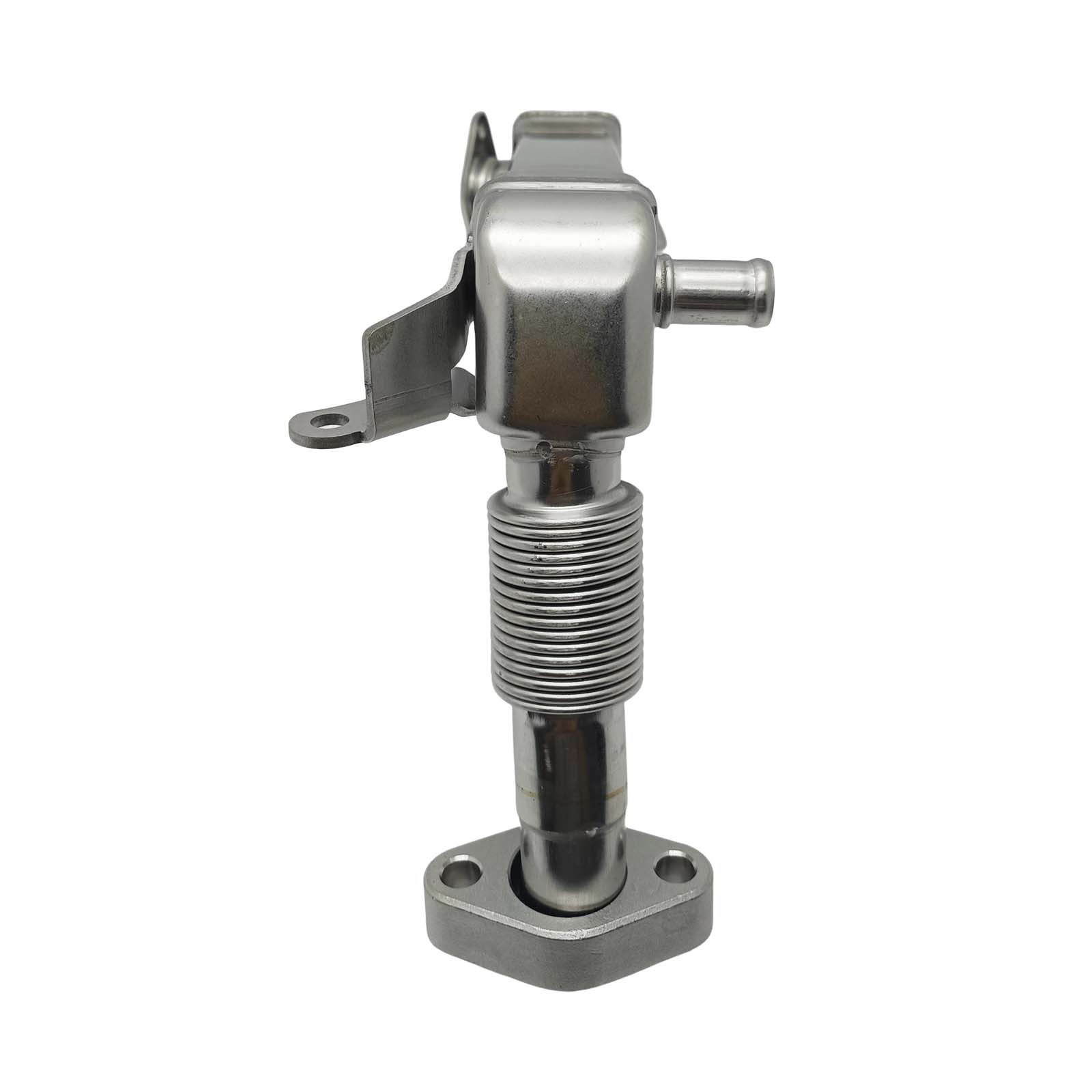
The physical internal layout dictates how gas flows and how heat escapes. Internal geometry profoundly impacts both thermal efficiency and maintenance intervals. The internal channels of the EGR cooler core determine the unit's susceptibility to soot deposition and pressure drops. We can categorize these geometries into three main architectural styles.
Tube-and-Fin Designs:
Engineers place thin, complex metallic fins inside the primary gas tubes. These internal fins drastically increase the total surface area. More surface area allows for very rapid heat transfer into the coolant jacket. They represent the most thermally efficient design per square inch.
Risk Factor: Finned structures are highly susceptible to clogging. The fins create physical traps for sticky hydrocarbons. If the engine runs rich or experiences high idle times, soot accumulates rapidly. Once fully fouled, you cannot clean these cores effectively. The hardened soot bakes onto the intricate fins, forcing a complete unit replacement.
Smooth Tube / Shell-and-Tube Designs:
This architecture relies on simple, unobstructed cylindrical tubes running through a coolant shell. Fluid dynamics explain its advantage. Smoother internal pathways maintain a higher gas velocity. Particulate matter simply passes completely through the tubes instead of settling. This naturally reduces overall fouling rates.
Trade-off: Smooth tubes lack internal surface area. They transfer heat much less efficiently than finned designs. To achieve the necessary temperature drop, you require a significantly longer overall core. Packaging a longer unit proves difficult in modern, cramped engine compartments.
Stacked Plate (Corrugated) Designs:
Manufacturers stamp corrugated patterns into thin metal plates and stack them together. This creates a highly compact middle-ground solution. The wavy corrugated channels induce turbulent gas flow. Turbulence mixes the hot gas thoroughly, which greatly enhances heat transfer efficiency. The unit remains relatively small while delivering high performance.
Risk Factor: Stacked plate designs possess hundreds of linear inches of brazed joints. They rely entirely on structural joint integrity to prevent coolant leaks. If a single joint fails due to thermal fatigue, the entire unit becomes compromised.
Best Practice: Always match the internal geometry to the engine's duty cycle. Highway trucks benefit from smooth tubes due to constant high-velocity flow. Urban delivery vehicles might require stacked plates to fit tighter engine bays.
Common Mistake: Avoid replacing a smooth tube unit with an aftermarket finned design simply because it costs less. The finned unit will likely clog within months under heavy diesel loads.
How manufacturers assemble the metal components dictates their ultimate survival. Traditional manufacturing methods often fall short under extreme thermal stress. We must examine the stark contrast between conventional welding and advanced brazing techniques.
The core problem lies in traditional TIG or MIG welding. Standard welding applies intensely localized heat to melt and fuse two metals. This intense localized heating creates distinct Heat-Affected Zones (HAZ) alongside the weld bead. The extreme temperature gradient alters the underlying metallurgical grain structure. The metal within the HAZ becomes rigid and inherently brittle. Engine vibrations and continuous thermal cycling flex the structure constantly. The brittle points snap, creating dangerous micro-cracks. Coolant easily escapes through these fractures.
Specifying a vacuum-brazed EGR cooler eliminates these fatal weak points. Vacuum brazing represents a massive leap in manufacturing durability. The process involves assembling the unjoined metal parts using a specially formulated filler alloy between the seams.
Technicians place the entire clamped assembly inside a highly controlled vacuum chamber. The furnace heats the entire unit evenly and simultaneously. Heat reaches the precise melting point of the filler alloy, while remaining below the melting point of the base metals. Capillary action draws the liquid filler deep into every joint perfectly. The vacuum environment completely eliminates oxygen. This prevents any harmful oxidation from occurring. Therefore, the process requires zero chemical flux.
The physical outcomes of vacuum brazing are remarkable. It produces superior, uniform joint strength across the entire component. Because the entire unit heats and cools evenly, no brittle heat-affected zones form. The capillary action eliminates micro-voids, effectively destroying all potential leak paths. The resulting monolithic structure demonstrates incredibly high resistance to high-frequency engine vibrations.
You must consider the cost versus return on investment (ROI). We acknowledge the higher upfront manufacturing cost of vacuum brazing. The specialized furnaces and extended processing times drive up the initial price. However, this investment validates itself rapidly. Fleet managers experience dramatically reduced warranty claims. More importantly, you prevent catastrophic engine failures. If a cheap welded joint fails, coolant floods the engine cylinders. This creates an immediate hydro-lock situation, often destroying the engine block entirely. Upfront investment in vacuum brazing saves thousands in eventual engine replacement costs.
You cannot select a cooling component in total isolation. It functions as one part of a complex, interconnected emissions system. You must ensure absolute system compatibility before authorizing any bulk procurement.
First, evaluate the integration parameters carefully. The cooler design must match the precise flow characteristics of the upstream EGR valve. The EGR Cooler inherently acts as a flow restrictor in the exhaust path. A highly restrictive core creates excessive backpressure. This backpressure can easily overwork the valve actuator mechanism. It can also cause severe carbon packing immediately behind the valve head. The valve may stick in the open or closed position, triggering immediate engine fault codes.
Next, demand rigorous engineering data. We strongly recommend requesting Computational Fluid Dynamics (CFD) data from potential manufacturers. CFD simulations visually model gas flow, velocity, and temperature drops across the internal geometry. Use this data to verify manufacturer claims regarding heat transfer efficiency. Ensure the pressure drop numbers align with your engine's acceptable tolerances. Never order bulk components without verifying the underlying thermal simulation data.
Finally, evaluate long-term maintenance and serviceability. You must determine if the manufacturer designed the cooler as a disposable consumable or a reusable asset. Finned geometries typically function as "throwaway" items. Once clogged, you discard them. Conversely, mechanics can easily remove smooth tube cores. They place them in ultrasonic cleaning tanks to dissolve the soot safely. An ultrasonically cleaned smooth tube unit can return to service multiple times. This dramatically lowers long-term maintenance expenses for large vehicle fleets.
Choosing an emissions cooling unit is never a simple commodity purchase. It represents a highly critical engineering decision. You must balance base material physics against advanced manufacturing integrity. Aluminum provides excellent heat transfer for light applications, while stainless steel guarantees survival in punishing heavy-duty environments. The internal geometry directly controls your fouling rates and maintenance schedules. Furthermore, investing in vacuum brazing technology protects your engine from catastrophic coolant leaks and expensive downtime.
We encourage all fleet operators and engineers to audit their current failure data immediately. Determine whether your recent part failures stem from internal coolant leaks or irreversible soot clogging. This diagnostic data will directly guide your next specification requirements. Contact technical sales representatives to request detailed specification sheets. Ask for CFD data and arrange for physical prototype testing in your specific engine applications.
A: Thermal fatigue causing internal micro-cracks is the most frequent cause, leading directly to coolant loss. Severe soot fouling closely follows this, which completely blocks exhaust flow and destroys thermal efficiency.
A: Smooth tube designs can often be ultrasonically cleaned and successfully reused multiple times. However, finned or complex stacked-plate designs are usually replaced due to irreversible soot baking deep within the internal crevices.
A: A clogged cooler creates excessive backpressure and rapid carbon buildup upstream. This dense carbon packing can cause the valve mechanism to stick open or closed, immediately triggering ECU fault codes and limp-mode conditions.
A: Rarely. Heavy-duty applications typically demand stainless steel or specialized alloys. These stronger metals withstand the higher exhaust gas temperatures, corrosive acidic condensates, and prolonged extreme load cycles generated by large commercial diesel engines.


